
Sennheiser Hearing Aids
Studio-Grade Audio Credibility.
Entry Level Price

What the All-Day Clear Is and Isn't
This is not the most advanced device. It doesn't compete with our other hearing aids on AI processing, connectivity, or feature depth. Knowing that upfront saves everyone time.

Pros
What the Sennheiser All Clear does include:
- Physical push-button controls for volume and program switching, which a lot of first-time wearers prefer over app-only management
- iPhone connectivity with full hands-free calling and audio streaming through MFi
- Up to 24 hours of battery per charge
- A 1-year manufacturer warranty
- A price more accessible than our premium-tier alternatives

Cons
What it doesn't include:
- Advanced AI noise reduction or deep neural network processing
- Auracast or Bluetooth LE Audio connectivity
- Native Android hands-free calling (requires ConnectClip accessory for Android streaming)
- Real-time environment detection at premium levels
- App-based control beyond basic adjustments
The Sennheiser Difference: A Name That Carries Weight
For first-time buyers navigating an unfamiliar category full of brands they've never heard of, trust matters more than the category tends to acknowledge. Sennheiser's audio credibility is not marketing copy. Decades of work in professional environments where the standards are exacting and users notice everything produced it.
Bringing that name into hearing care means something, even if the All-Day Clear isn't playing in the same tier as Sennheiser's concert hall microphones. It represents a company that understands what good audio is supposed to sound like. For someone who has been putting off addressing hearing loss because every option feels like a commitment to an unfamiliar world, that's not nothing. It's a pretty good place to start.

Sennheiser
Sennheiser All-Day Clear

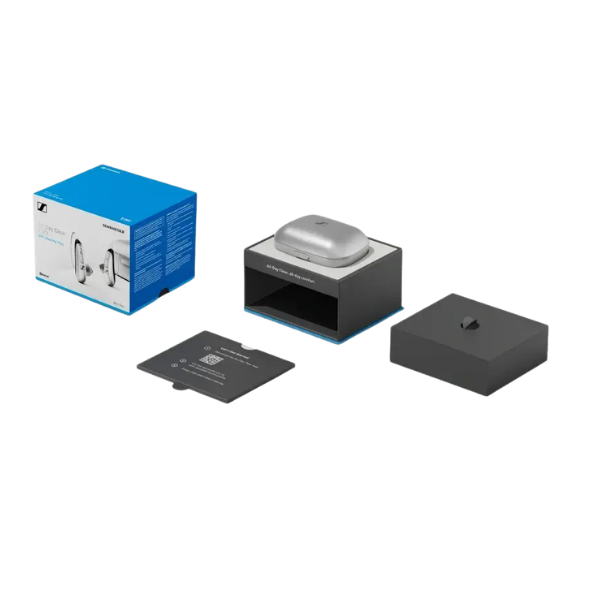
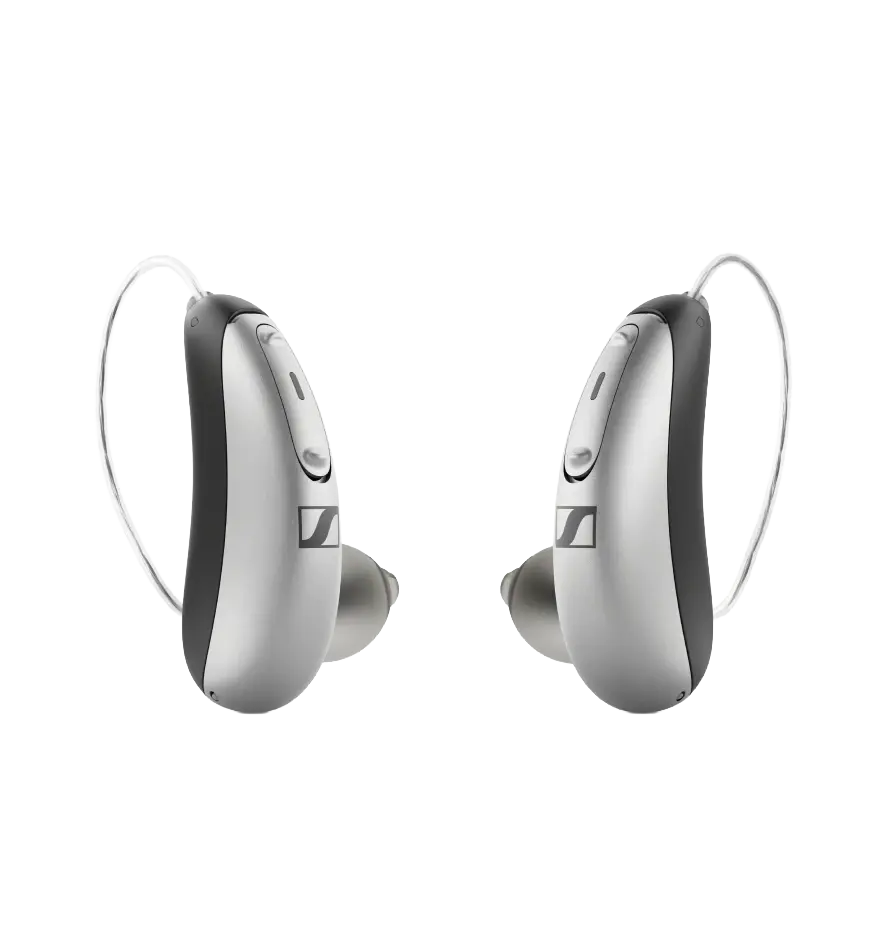
The All-Day Clear is best suited for:
It is not the right choice for:
Who the All-Day Clear Is For
There is a real audience for a hearing aid that does the fundamentals without asking its wearer to become a power user. Not everyone coming to hearing aids for the first time wants a full-featured AI platform with multiple programs, a companion app, and 56 hours of battery life. Some people want to address a real hearing need, get used to wearing hearing aids, and not feel like they're configuring professional audio software in the process. The irony of that last point, given who makes this device, is not lost on us.
The Honest FAQ for the Sennheiser All-Day Clear
Does the Sennheiser All-Day Clear work with Android phones?
It uses MFi (Made for iPhone) connectivity, which provides full hands-free calling and audio streaming on iPhone. Android users can stream audio using the ConnectClip accessory, but native Android hands-free calling isn't supported. If Android hands-free calling is a priority, other models in our lineup offer stronger compatibility and won't require an accessory to do something your phone should already do.
How does the All-Day Clear compare to premium hearing aids?
The All-Day Clear is an entry-level device. It does not include advanced AI noise processing, Auracast or LE Audio connectivity. Battery life runs up to 24 hours per charge. For mild to moderate hearing loss with straightforward listening needs, it handles the fundamentals well. For more complex loss or demanding rooms, our product specialists can help you find the right step up.
What hearing loss level is the Sennheiser All-Day Clear designed for?
Mild to moderate hearing loss. If your audiogram indicates moderate to severe or severe hearing loss, other models in our lineup are better suited to your amplification needs. Our team can review your audiogram and confirm the right device before you purchase, which takes about as long as a coffee and costs you nothing.
Why is the All-Day Clear significantly less expensive than premium hearing aids?
The lower price reflects fewer features, not lower quality construction or compromised professional care. You receive the same licensed fitting, the same authorized retailer warranty, and the same unlimited adjustment support as any other Injoy purchase. What you're not getting is AI processing, advanced connectivity, or flagship-tier noise management. For users who don't need those features, the savings are real and the tradeoff is honest.
How Sennheiser Got Here
Sennheiser was founded in Wedemark, Germany by Fritz Sennheiser, who started the company in a small lab with a handful of engineers in the immediate aftermath of the Second World War. The timing was not ideal. The results were remarkable. Over the decades that followed, Sennheiser became one of the most trusted names in professional audio, supplying recording studios, broadcast networks, concert venues and film productions worldwide.
| Year | Milestone |
|---|---|
| 1945 | Founded in Wedemark, Germany by Fritz Sennheiser |
| 1947 | Released first microphone, the MD 2 |
| 1982 | Launched the MKH 416, still the most widely used film microphone today |
| 2000s | Expanded into wireless microphone systems for live performance and broadcast |
| 2020s | Entered the hearing care market with the All-Day Clear |
The step from concert halls to ear canals is a shorter one than it might seem. Sennheiser has spent a very long time thinking about how sound reaches ears. The All-Day Clear is what happens when that thinking gets applied to a problem that still does not get taken seriously enough.

Why Buy the Sennheiser All-Day Clear Through Injoy
The All-Day Clear is an over-the-counter device, which means you could buy one and set it up yourself. Through Injoy you do not have to. A licensed hearing care provider programs it to your audiogram before it ships, then fits and fine-tunes it with you by phone or video.
Every All-Day Clear purchase through Injoy includes an authentic device from an authorized retailer, licensed hearing care provider fitting and remote programming, unlimited remote adjustments with no time limits and no session caps, a 60-day risk-free trial with a full refund if it is not right, a 1-year manufacturer warranty and 1-year loss and damage coverage, and phone support from people who know the whole catalog.
The All-Day Clear is our most accessible option, and the right one for plenty of people. If your hearing loss or your listening life needs more, we will tell you that instead of selling you this.