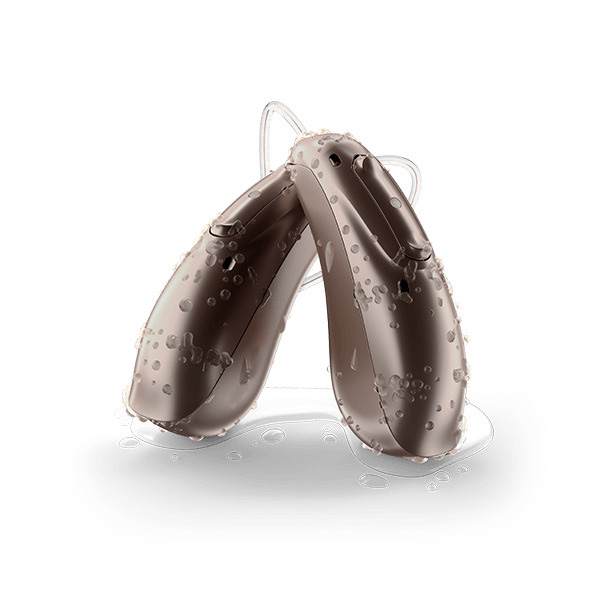


Are Costco Hearing Aids as Good? It Depends.
TL;DR: Costco sells legitimate prescription hearing aids at genuinely low prices. The catch? A lineup that’s a generation behind, no online purchasing, and a support

Updated December 30th, 2025
Hearing aid shopping feels like decoding alien technology until you realize 80% of people end up choosing the same style. RIC hearing aids outsell every other type because they nail the sweet spot between performance, comfort, and not screaming “I’m wearing hearing aids.” Injoy Hearing sells premium RIC models for thousands less than clinics charge, with the same licensed support.
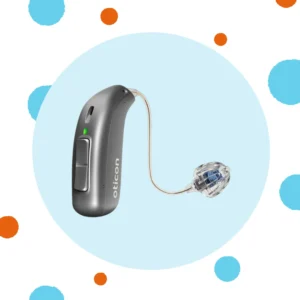
RIC stands for Receiver-In-Canal, which sounds technical until you understand what it means. The speaker (receiver) sits in your ear canal while the processor lives behind your ear. A thin wire connects the two pieces.
Traditional behind-the-ear hearing aids cram everything into one chunk behind your ear. RIC hearing aids split the components between two locations, which creates some serious advantages.
The behind-the-ear piece houses batteries, microphones, and processing chips. The receiver delivers amplified sound directly into your ear canal through a small dome or custom ear mold.
Most people can’t see the thin wire connecting the pieces. The behind-the-ear component is smaller than traditional BTE models because the receiver doesn’t live there anymore.
Audiologists fit more RIC hearing aids than all other styles combined. That happened for good reasons beyond marketing hype.
The small behind-the-ear piece weighs almost nothing. You forget you’re wearing them within minutes, unlike bulky traditional hearing aids that dig into your ear.
Open-fit domes let air flow into your ear canal naturally. Your voice doesn’t sound like you’re talking in a barrel, which audiologists call the occlusion effect.
Research shows that RIC hearing aids improve speech understanding while reducing the annoying echo of your own voice. The receiver placement closer to your eardrum creates more natural sound quality.
Custom ear molds work for severe hearing loss when you need more power. The same RIC hearing aid adapts to different ear canal shapes with swappable receivers.
Placing the receiver directly in your ear canal shortens the distance sound travels. Less distance means clearer audio with fewer distortions.
The thin wire between components carries electrical signals instead of amplified sound. Electrical signals don’t degrade like sound waves moving through tubing in traditional hearing aids.
Feedback (that annoying whistle) happens less often because the microphone sits farther from the speaker. The physical separation between components prevents sound from looping back into the microphone.
Multiple receiver strengths handle mild to severe hearing loss with the same hearing aid shell. Swap a weaker receiver for a stronger one if your hearing changes, rather than buying completely new devices.
Bluetooth streaming performs better when components have room to breathe. RIC designs accommodate the antennas and radios needed for reliable phone connections.
Rechargeable batteries fit comfortably in the behind-the-ear piece. Larger traditional hearing aids had room for rechargeables first, but RIC caught up quickly with lithium-ion technology.
Directional microphones space apart optimally on RIC hearing aids. The behind-the-ear placement lets manufacturers position mics for better front-to-back sound discrimination.
Hearing aid apps connect via Bluetooth for instant adjustments. Change volume, switch programs, or tweak bass and treble from your phone without touching the hearing aids.
Receivers fail more often than other components because they sit in your ear’s moisture and wax. RIC hearing aids let you swap just the receiver instead of shipping the entire device for repair.
Most hearing care providers keep replacement receivers in stock. Your appointment becomes a quick swap rather than weeks without hearing aids.
Cleaning and maintenance stay simple because the behind-the-ear piece rarely gets dirty. Wax guards on the receiver protect the speaker from debris.
RIC hearing aids dominate for good reasons, but they’re not perfect for everyone. Understanding the limitations helps you choose wisely.
The thin wire connecting components requires gentle handling. People with severe arthritis or hand tremors sometimes struggle with daily insertion and removal.
Replacing wax guards and cleaning receivers demands decent fine motor control. The small parts frustrate some users who prefer larger, easier-to-handle components.
Battery changes on non-rechargeable models require pinching tiny doors and handling small cells. Rechargeable RIC hearing aids solve this problem completely.
The receiver sitting in your ear canal faces more moisture exposure than fully external styles. Humid climates, heavy sweating, or water activities increase maintenance needs.
Wax guards protect the receiver but need regular replacement. Forget to change them, and sound quality degrades or stops entirely.
Modern RIC hearing aids include water-resistant coatings and nano-coating protection. They handle normal daily moisture fine but aren’t designed for swimming or showering.
RIC hearing aids handle mild to severe hearing loss excellently. Profound loss sometimes requires traditional BTE power with custom ear molds for maximum amplification.
The physical separation between receiver and microphone limits maximum output before feedback occurs. Ultra-power RIC receivers exist but traditional BTEs still win for the most severe losses.
Most people fall into mild to severe ranges where RIC performs perfectly. Audiologists recommend traditional BTEs only when RIC can’t provide enough amplification safely.
RIC hearing aids represent one style among several options. Understanding the real differences helps you choose based on your actual needs rather than marketing claims.
Behind-the-ear hearing aids with tubing to ear molds deliver the most amplification possible. The larger size accommodates bigger batteries, stronger receivers, and more processing power.
Traditional BTEs work best for profound hearing loss or oddly shaped ear canals. The custom ear mold seals completely for maximum sound delivery without feedback.
Visibility matters less when you need serious amplification. Traditional BTEs sit larger behind your ear with thicker tubing running to the ear mold.
Durability wins with traditional BTEs because all electronics stay outside your ear. Moisture and wax can’t damage components that never enter your ear canal.
Custom molded hearing aids that sit entirely in your ear offer near-invisible wearing. CIC (completely-in-canal) and IIC (invisible-in-canal) devices hide deep in your ear canal.
Limited battery life comes with smaller sizes. Tiny disposable batteries last 3-5 days compared to rechargeable RIC models lasting 18+ hours per charge.
Handling challenges increase as size decreases. Removing a device buried in your ear canal requires good dexterity and vision.
Power limitations restrict custom in-ear styles to mild and moderate hearing loss. Severe loss needs larger hearing aids with more amplification capability.
Occlusion effect hits harder with custom in-ear devices. Your voice sounds boomy and unnatural because your ear canal is completely sealed.

RIC hearing aids balance discretion, power, comfort, and features better than other styles for most people. The thin wire and small behind-the-ear piece stay subtle.
Open-fit domes eliminate occlusion effect while custom molds provide power when needed. The same RIC hearing aid adapts to your specific requirements.
Modern features like Bluetooth, rechargeability, and AI processing fit comfortably in RIC designs. Manufacturers focus innovation on RIC platforms because that’s what people buy.
| Feature | Traditional BTE | RIC | CIC/IIC |
|---|---|---|---|
| Visibility | Most visible | Low visibility | Nearly invisible |
| Power Range | Mild to profound | Mild to severe | Mild to moderate |
| Battery Life (Rechargeable) | 20+ hours | 16-18 hours | Not available |
| Battery Life (Disposable) | 10-14 days | 5-7 days | 3-5 days |
| Ease of Handling | Easiest | Moderate | Most challenging |
| Occlusion Effect | Minimal with open molds | Minimal with open domes | Significant |
| Feedback Risk | Low | Very low | Moderate |
| Moisture Resistance | Excellent | Good | Fair |
| Bluetooth Capability | Yes | Yes | Limited/No |
| Repair Convenience | Good | Excellent | Fair |
| Best For | Profound loss, dexterity issues | Most hearing loss types | Cosmetic priority, mild loss |
Understanding these trade-offs matters more than finding a “best” style. RIC hearing aids serve most people’s needs excellently, which explains their market dominance.
Every major manufacturer focuses on RIC designs because that’s what works for most people. These models represent the best RIC hearing aids available in 2026.
Phonak Audéo Sphere Infinio I90 uses a dedicated AI chip for unprecedented noise reduction. The Sphere Infinio processes 53 million calculations per second to isolate speech in noisy environments.
Phonak Audéo Lumity L90-R delivers proven performance with AutoSense OS that automatically adjusts to your environment. The Lumity L90-R includes full Bluetooth streaming and rechargeable convenience.
Starkey Omega AI 24 represents Starkey’s newest platform with AI that learns your preferences. Omega AI includes edge mode processing for enhanced speech clarity during challenging conversations.
Starkey Edge AI 24 offers premium features at a mid-tier price point. The Edge AI 24 provides the same excellent Bluetooth and hands-free calling as Omega AI with slightly fewer automatic programs.
ReSound Vivia 9 delivers premium connectivity including Auracast broadcast audio for public venue streaming. Vivia 9 offers All Access Directionality that maintains spatial awareness while focusing on speech.
ReSound Nexia 9 brings Auracast capability to ReSound’s smallest rechargeable RIC platform. The Nexia 9 combines compact size with full modern features including Bluetooth Low Energy Audio.
Signia Pure Charge&Go BCT IX 7 combines Bluetooth Classic and Low Energy in one device for maximum compatibility. The Pure Charge&Go BCT IX includes Integrated Xperience processing that balances speech focus and ambient awareness.
Oticon Real 1 processes sound naturally rather than artificially enhancing speech. Oticon Real 1 includes SuddenSound Stabilizer that prevents jarring audio spikes from startling you.

Same manufacturers, same warranties, same devices. We skip the retail clinic overhead that doubles prices without improving your hearing.
Licensed hearing care providers handle your fitting remotely through video consultations. Professional programming happens through your smartphone rather than driving to appointments.
Every RIC hearing aid includes ongoing remote support and adjustments. Settings changes take minutes through video calls instead of scheduling clinic visits weeks out.
The 60-day trial period lets you test RIC hearing aids in your actual life. Restaurants, family gatherings, work meetings, and TV watching all happen before you commit fully.
Three-year manufacturer warranties cover repairs and malfunctions. Loss and damage protection adds peace of mind for active lifestyles where accidents happen.
You might also want to explore our guides on rechargeable hearing aids, tinnitus management options, or affordable senior hearing solutions to understand all your options. For a deeper comparison of styles, check out our complete hearing aid style guide or our detailed RIC vs BTE showdown.
Contact Injoy Hearing to discuss whether RIC hearing aids match your hearing loss, lifestyle, and dexterity. Our team recommends based on your actual needs, not sales quotas.
RIC hearing aids excel for mild to severe hearing loss, which covers most people who need amplification. They balance comfort, sound quality, discretion, and modern features better than other styles. The receiver placement in your ear canal creates natural sound while the small behind-the-ear piece stays subtle. Open-fit domes eliminate the barrel-voice effect that plagues custom in-ear devices. However, RIC hearing aids aren’t perfect for everyone. People with severe dexterity issues might struggle with the thin wire and small components. Profound hearing loss sometimes requires traditional BTE power. For the 80% of hearing aid wearers with mild to severe loss and reasonable hand coordination, RIC hearing aids deliver excellent performance. That’s why they dominate the market.
No single “#1” hearing aid exists because everyone’s hearing loss differs. Phonak Audéo Sphere Infinio I90 leads for speech in noise with dedicated AI processing. Starkey Omega AI 24 excels at learning preferences over time. ReSound Vivia 9 offers premium connectivity including Auracast for public venue streaming. Oticon Real 1 delivers the most natural sound for music lovers. The “best” hearing aid matches your specific hearing loss pattern, lifestyle needs, and budget. Someone who struggles mainly in restaurants needs different technology than someone who mostly watches TV quietly. Premium RIC models from major manufacturers all perform excellently. Success depends more on proper fitting and programming than choosing between top-tier devices. Work with hearing care providers who recommend based on your actual situation rather than pushing one brand.
RIC hearing aids ARE a type of BTE (behind-the-ear) device, just with the receiver separated from the main body. Traditional BTEs with tubing to ear molds deliver more power for profound hearing loss and handle moisture better since all electronics stay outside your ear. RIC hearing aids work better for mild to severe loss with superior comfort, less occlusion effect, better feedback management, and easier repairs. Choose traditional BTE when you need maximum amplification or have severe dexterity limitations. Choose RIC for everything else. The receiver-in-canal design provides more natural sound quality and modern features like Bluetooth work better in RIC platforms. About 80% of hearing aid purchases are RIC styles because they serve most people’s needs best. For detailed comparison including other styles like CIC and ITE, check our hearing aid style showdown.
Yes, many people use RIC hearing aids in one ear with a cochlear implant in the other for bimodal hearing. Some manufacturers design devices specifically for this combination. The RIC hearing aid amplifies sound in the better ear while the cochlear implant provides electrical stimulation in the implanted ear. Both devices working together often provide better speech understanding than either alone. Check our guide on hearing aids compatible with cochlear implants for specific recommendations and compatibility information.
RIC hearing aids typically last 5-7 years with proper care and maintenance. The receiver may need replacement every 1-2 years depending on ear wax production and moisture exposure. Rechargeable batteries lose capacity over time but most provide 3-4 years of reliable performance before degradation becomes noticeable. Technology advances rapidly enough that many people upgrade before their hearing aids actually fail. Regular cleaning, annual professional checkups, and proper storage extend lifespan considerably.
RIC hearing aids handle mild to severe hearing loss excellently with appropriate receivers and programming. Ultra-power receivers provide enough amplification for most severe losses. Profound hearing loss sometimes requires traditional BTE hearing aids with custom ear molds for maximum output without feedback. Your audiogram determines whether RIC provides sufficient amplification for your specific loss pattern. Most people with severe high-frequency loss combined with better low-frequency hearing do well with power RIC receivers and custom molds.
TL;DR: Costco sells legitimate prescription hearing aids at genuinely low prices. The catch? A lineup that’s a generation behind, no online purchasing, and a support

TL;DR: Hearing loss doesn’t wait for retirement. The best hearing aids for young adults combine discreet design, seamless Bluetooth streaming, and serious AI performance, so

TL;DR: Restaurants are one of the hardest listening environments on the planet, and standard hearing aids often make the problem worse, not better. This guide
TL;DR: The ReSound Vivia 9 vs Starkey Omega AI 24? Two of the most advanced hearing aids available. Both are current-year flagships with serious AI