

Are Costco Hearing Aids as Good? It Depends.
TL;DR: Costco sells legitimate prescription hearing aids at genuinely low prices. The catch? A lineup that’s a generation behind, no online purchasing, and a support
TL;DR: Short answer: no. Slightly longer answer: sleeping with your hearing aids in is hard on your devices, not great for your ears, and probably not doing your sleep any favors either. Most licensed hearing care providers recommend taking them out before bed. If you’ve nodded off with them in once or twice, relax. You haven’t committed a felony. But making it a habit is where things get expensive.
Hearing aids have one job: helping you hear better while you’re actually living your life. Dinner table arguments, work calls, that restaurant where everyone mumbles. Sleep, on the other hand, is the one stretch of your day when your ears get a pass. So the question of whether you can sleep with hearing aids in has a short answer and a longer one. The short version is no. The longer version explains why it matters, what actually happens when you do, and how to build a routine that keeps both your hearing and your investment in good shape. If you’re still figuring out which hearing aids to buy, our hearing aid buying guide is a good place to start.
The professional guidance on this is clear and consistent. Licensed hearing care providers universally advise removing hearing aids before bed.
Dr. Jaime Parks, Audiologist and Co-founder of Injoy Hearing, puts it plainly:
“We don’t recommend sleeping with hearing aids in. It’s not great for your hearing aids or your ears. However, if you accidentally fall asleep with them in once in a while, it’s not something to stress over.”
That last part matters. Nobody is here to make you feel bad about dozing off on the couch mid-episode. The goal is to understand why a nightly removal habit is one of the better things you can do for long-term device performance and ear health.
Four distinct categories of concern apply here: physical comfort, device longevity, ear health, and sleep quality. Each one is worth understanding on its own terms.

How much discomfort you experience sleeping with hearing aids in depends largely on the style you wear. Behind-the-ear and receiver-in-canal devices have a hard casing that sits on the outer ear and presses against the skull when you roll onto your side. That pressure can wake you up, cause soreness, or simply make it harder to fall asleep. Completely-in-canal styles sit deeper in the ear canal, which creates a different kind of discomfort, a plugged or pressured feeling, particularly if you sleep on your side. In-the-ear and earbud-style devices fall somewhere in between. Our complete hearing aid style guide breaks down the form factor differences if you’re still weighing your options.
Beyond physical pressure, there’s the issue of feedback. When a hearing aid microphone makes contact with a pillow, it produces a whistling or squealing sound. This feedback can disturb your sleep and, if you share a bed, your partner’s sleep too. Nothing says romance like a hearing aid screaming into a throw pillow at 2am.
Your ear canal produces moisture constantly, and your body temperature rises during sleep. Together, those two factors create a humid environment inside the ear that hearing aids cannot tolerate for extended overnight periods, even those rated IP68 for water resistance.
Moisture ranks among the leading causes of hearing aid failure. It seeps into microphone ports, corrodes receiver components, and degrades battery contacts over time. Removing your devices at night and storing them in a dry, ventilated case is one of the simplest maintenance habits that extends device life significantly.
Your ears need unobstructed time each day to manage their natural processes. Earwax moves out of the ear canal on its own, but a dome or earmold blocking the path disrupts that process. Wearing hearing aids for most of your waking hours already limits this natural clearing. Keeping them in overnight removes whatever window remained.
Blocked earwax can cause discomfort, pressure, and in some cases, infections. Giving your ears time to breathe at night supports the natural maintenance they’re constantly trying to do.
Rechargeable hearing aids are designed with daily charge cycles in mind. Most modern devices, including flagship models like the Starkey Omega AI and ReSound Vivia, last through a full waking day on a single charge, with hours of battery life to spare. Leaving them in overnight drains that reserve, reduces the number of complete cycles available over the battery’s lifespan, and means you may start the next day depleted.
It happens to most hearing aid users at some point. One night is unlikely to cause serious damage, so take a breath. What you experience, and what to do next, varies a bit by device type.
Behind-the-ear and receiver-in-canal devices are the most likely to cause physical discomfort overnight. You may wake up with soreness around the ear or redness where the device pressed against your head. Feedback whistling from pillow contact is also common with these styles.
Completely-in-canal devices sit deeper in the ear canal, so pillow feedback is less of an issue. The concern here is moisture and earwax buildup. A full night of wear in a sealed canal accelerates both, making a thorough cleaning especially important if this happens.
Earbud-style hearing aids tend to be more comfortable for incidental sleep, but they carry the same moisture and battery drain risks as any other style.
Regardless of style, here’s your morning-after checklist:
If you notice any change in performance after accidental overnight wear, a quick check-in with your licensed hearing care provider can sort things out. With an unlimited remote care model, that kind of adjustment costs you nothing extra.
Here’s something worth understanding that goes beyond the practical care routine. Sleep and hearing health are more closely connected than most people realize.
Research has shown that people with hearing loss tend to report poorer sleep quality. Studies using the Pittsburgh Sleep Quality Index found statistically significant differences between those with hearing loss and those without. PubMed Central The relationship runs in both directions. A 2025 study published in Frontiers in Neuroscience using NHANES population data found a meaningful association between abnormal sleep duration and hearing loss in adults aged 20 to 69. Frontiers
Protecting your sleep quality and protecting your hearing health are not separate goals. They reinforce each other. Taking your hearing aids out at night, building a consistent care routine, and prioritizing quality rest are all part of the same picture.

This is one of the most common questions from new hearing aid users, and the guidance is consistent across licensed providers: wear them during all of your waking hours.
That typically works out to 12 to 16 hours per day for most people, minus sleep time. Here’s why that consistency matters:
Your brain needs time to adapt. Hearing aids don’t just amplify sound. They change how your auditory system processes it. Consistent exposure to the amplified signal is what allows the brain to recalibrate. Wearing hearing aids part-time dramatically slows that adjustment process.
Consistent use is linked to better outcomes. Research across multiple studies shows that people who wear their hearing aids more hours per day report better speech understanding, better quality of life, and in some cases, measurable cognitive benefits. A University of Melbourne study found that more frequent hearing aid use was associated with greater improvements in cognitive function, with 97.3% of participants showing either clinically significant improvement or stability in executive function after 18 months of use. ScienceDaily
New users: build up gradually. Starting with a few hours and increasing from there is completely normal if your devices are newly fitted. Your licensed provider can advise on a schedule that matches your adjustment pace. Unlimited remote sessions mean you can check in as often as needed during that break-in window. Learn more about recognizing the signs of hearing loss if you’re earlier in that process.
Hearing science has spent considerable effort answering this question, and the findings are encouraging.
When hearing loss goes untreated, the brain compensates. The auditory cortex, the region responsible for processing sound, receives less input. Over time, that reduced stimulation changes how the brain allocates cognitive resources. Listening with untreated hearing loss becomes effortful in a way that creates a real cognitive drain, pulling attention and working memory away from other tasks.
Hearing aids address that by restoring auditory input. A systematic review spanning 30 years of research and more than 3,500 participants found that the most consistent cognitive benefit appears in the domain of executive function, with six studies showing improvement. Results suggest hearing aids are a relatively low-cost intervention compared to the high costs of cognitive decline. PubMed Central
There is also an important connection to long-term brain health. The ACHIEVE clinical trial found that a hearing intervention, including hearing aids and counseling, resulted in a 48% slowing of global cognitive decline in high-risk individuals over three years, with effects most pronounced in language-related cognitive function. Alzdiscovery
None of this means hearing aids treat cognitive decline. They are hearing devices. The growing evidence base does, however, make a strong case for consistent, properly fitted use. To go deeper on this topic, our article on hearing and brain function covers the science in more detail.
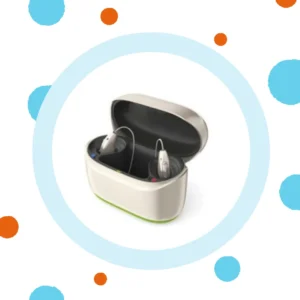
Removing your hearing aids before bed is the first step. The rest is equally simple:
That’s the whole routine. Five minutes at most, and your devices will thank you, quietly and without complaining, which is more than can be said for most relationships.
A lot of nighttime discomfort, feedback issues, and poor sound quality trace back to the same root cause: devices that weren’t fitted correctly to begin with. A properly fitted hearing aid, with the right dome size and ear canal placement, should feel comfortable during waking hours and create no sensation that tempts you to leave it in at night.
Our licensed hearing care providers use the same manufacturer software that traditional clinics use to program your devices to your audiogram. Getting that programming right, and adjusting it over time as your hearing and lifestyle evolve, is what separates a device that works from one that sits in a drawer.
If you’re comparing specific models or technology levels, our Phonak vs. ReSound and Phonak vs. Signia comparisons walk through the key differences in plain language.
Injoy Hearing is an authorized retailer for Phonak, Starkey, ReSound, Signia, Oticon, Widex, and Sennheiser. Every pair of prescription hearing aids we sell comes with a valid manufacturer warranty, fitting and programming by licensed hearing care providers using official manufacturer software, unlimited remote adjustments with no session caps and no time limits, a 60-day risk-free trial with a full refund and no restocking fees, and real phone support answered within two minutes by knowledgeable specialists.
We’re not a website that ships you a box and wishes you luck. Whether you have questions about your nightly routine, need a sound adjustment after the first few weeks, or just want to get more out of your devices, our team is available throughout your entire ownership. The care doesn’t stop at the sale. Neither does the good hearing.
Ready to find the right hearing aids and get them professionally fitted from the comfort of home? Talk to one of our hearing specialists and get personalized guidance with no pressure and no appointment needed.
Occasional accidental overnight wear is unlikely to cause serious damage. Behind-the-ear and receiver-in-canal users may notice soreness or feedback marks from pillow contact. Completely-in-canal users should pay extra attention to moisture and earwax buildup. Remove the devices when you wake up, wipe them down, and store them in their case with time to air out. If you notice any change in sound quality, a quick remote check-in with your licensed provider can address it.
Most licensed hearing care providers recommend wearing hearing aids during all waking hours, typically 12 to 16 hours per day. Consistent daily wear helps your brain adapt to amplified sound and links to better speech understanding and cognitive outcomes. New users may start with shorter periods and increase gradually under their provider’s guidance.
Hearing aids restore auditory input that the brain would otherwise strain to process on its own. Research links consistent hearing aid use to improvements in executive function and, in high-risk individuals, a meaningful slowing of cognitive decline. Hearing aids are not a treatment for cognitive conditions, but protecting your hearing appears to be one meaningful way to support long-term brain health.
TL;DR: Costco sells legitimate prescription hearing aids at genuinely low prices. The catch? A lineup that’s a generation behind, no online purchasing, and a support

TL;DR: Hearing loss doesn’t wait for retirement. The best hearing aids for young adults combine discreet design, seamless Bluetooth streaming, and serious AI performance, so

TL;DR: Restaurants are one of the hardest listening environments on the planet, and standard hearing aids often make the problem worse, not better. This guide
TL;DR: The ReSound Vivia 9 vs Starkey Omega AI 24? Two of the most advanced hearing aids available. Both are current-year flagships with serious AI