
ReSound vs. Signia Hearing Aids: Which Is Right for You?
TL;DR: ReSound and Signia are both genuinely great, which is an annoying thing to read when you just want someone to pick one. So here’s

The Sennheiser All Day Clear and Starkey Evolv AI serve different needs despite living in the same price neighborhood. One’s an over-the-counter option that works for mild to moderate hearing loss. The other’s a prescription device with professional programming for more complex needs. Both deliver solid performance without the premium price tag, but knowing which fits your hearing profile makes all the difference.
Let’s break down exactly what you’re getting with each model, where they excel, and when you should call Injoy Hearing to talk through your options.
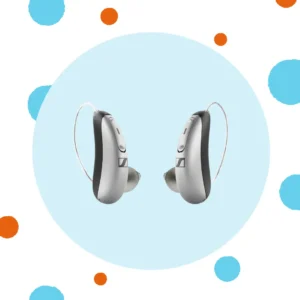
The Sennheiser All Day Clear entered the market after new OTC regulations changed the hearing aid game. Sennheiser partnered with Sonova (the parent company behind Phonak) to create an OTC device that actually performs like a prescription hearing aid. This isn’t a cheap amplifier disguised as a medical device.
You get the device, download an app, run a hearing test on your phone, and the hearing aids program themselves. No appointments. No waiting rooms. No paying for overhead you don’t need.
The All Day Clear uses real hearing aid technology: digital signal processing, noise reduction, and adaptive directionality. It handles mild to moderate hearing loss across most frequencies. For many people dealing with age-related hearing changes, this device delivers everything they need at a fraction of traditional clinic prices.
The catch? OTC hearing aids work for specific hearing profiles. If your hearing loss is severe, asymmetric between ears, or involves complex frequency patterns, you’ll need the customization that only prescription devices offer.
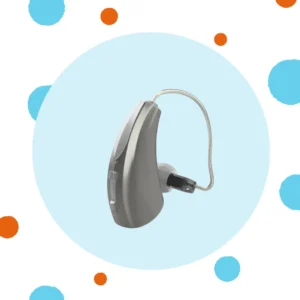
The Starkey Evolv AI sits in Starkey’s mid-tier lineup, which means it’s not their flagship Edge AI or new Omega AI, but it’s far from basic. This is a prescription hearing aid that requires professional programming based on a formal audiogram.
Starkey built the Evolv AI around their proprietary AI technology that analyzes your sound environment 55 million times per hour. That processing power adjusts settings automatically as you move from quiet rooms to noisy restaurants to outdoor spaces. You’re not manually switching programs or fiddling with volume constantly.
The Evolv AI includes advanced features like feedback cancellation, speech enhancement, and edge computing that happens inside the device itself rather than relying on your phone. This model handles moderate to severe hearing loss and can be fine-tuned for unusual hearing patterns that OTC devices can’t address.
You’ll need a hearing test and professional fitting, but that’s the point. The prescription pathway gives you customization that generic OTC programming can’t match.
Both devices use receiver-in-canal (RIC) designs with thin wires connecting the main body to the speaker that sits in your ear canal. This style balances performance with discretion, and both models offer similar physical profiles.
The Sennheiser All Day Clear comes in one color (charcoal gray) with three dome sizes to fit different ear canals. The design is straightforward and functional. You won’t mistake it for jewelry, but it’s not bulky either. The charging case is compact and travel-friendly.
The Starkey Evolv AI offers more style options with multiple colors and custom shell options if you need a specific fit. Starkey also includes their proprietary ear tips designed to reduce occlusion (that plugged-up feeling some people experience with hearing aids). If you’ve tried hearing aids before and found them uncomfortable, these fit options matter.
Comfort often comes down to individual ear anatomy more than brand differences. Both models use similar hearing aid styles, but the Evolv AI’s customization options give it an edge if standard domes don’t work for you.

Here’s where things get interesting. The Sennheiser All Day Clear uses 16-channel processing, which means it divides sound into 16 frequency bands for individual adjustment. That’s more channels than many prescription hearing aids offered just a few years ago. For mild to moderate hearing loss, this provides excellent sound quality and speech clarity.
The device includes automatic environment detection that switches between preset programs for quiet, noise, and music. The noise reduction works well in moderately noisy environments. You’ll hear conversations in coffee shops and family dinners without feeling overwhelmed by background clatter.
The Starkey Evolv AI uses 24-channel processing with more sophisticated AI-driven adjustments. Starkey’s processing doesn’t just recognize environments; it continuously adapts gain and compression patterns within those environments. If someone starts talking while you’re in a noisy restaurant, the AI prioritizes speech frequencies in real time.
The Evolv AI also includes frequency compression technology, which is crucial if you have high-frequency hearing loss (common with age-related changes). This feature shifts high-frequency sounds into ranges you can still hear, improving consonant clarity and speech understanding.
Neither device will match flagship models like the Phonak Sphere Infinio Ultra or Starkey Omega AI in extreme noise, but both perform well in everyday situations where most people actually use hearing aids.
Both devices connect to smartphones via Bluetooth, letting you stream calls, music, and podcasts directly to your hearing aids. This feature alone justifies the upgrade from older analog devices or basic amplifiers.
The Sennheiser Smart Control app handles all adjustments for the All Day Clear. You can change volume, switch programs, adjust bass and treble, and run new hearing tests if your hearing changes. The interface is clean and intuitive. Most users figure it out without needing instruction manuals or YouTube tutorials.
The Starkey Thrive app offers similar controls with additional health tracking features. The Evolv AI can count steps, track physical activity, and monitor hearing aid usage patterns. Some people love these features; others find them gimmicky. Your mileage varies based on whether you want your hearing aids doubling as fitness trackers.
Both apps let you save custom settings for specific locations. If you attend weekly choir practice or regular coffee shop meetups, you can create and recall settings optimized for those environments. This works particularly well for situations you encounter repeatedly.
Remote programming differs between the two models. The Sennheiser handles all adjustments through the app yourself. The Evolv AI can receive remote adjustments from hearing care providers, which means our licensed experts can fine-tune your settings without requiring you to visit a clinic. That ongoing support makes a difference as you adapt to wearing hearing aids.
The Sennheiser All Day Clear runs on integrated rechargeable batteries that last roughly 24 hours per charge. You’ll get a full day of use including Bluetooth streaming, which is standard for modern hearing aids. The charging case provides one full additional charge, giving you backup power for overnight trips.
Charging takes about three hours from empty to full. The case uses USB-C, so you’re not carrying proprietary cables that only work with one device.
The Starkey Evolv AI offers similar battery performance with 24-hour runtime and roughly three-hour charging time. Starkey’s case is slightly larger but includes a battery indicator showing remaining charge levels. Both models use the same basic lithium-ion technology, so performance differences are minimal.
Neither device offers disposable battery options, which means you’re committed to nightly charging. If you travel frequently or spend extended time away from power sources, you’ll need to plan accordingly. The rechargeable design does eliminate the ongoing cost and hassle of buying batteries every week.
The Sennheiser All Day Clear retails for around $2000 for a pair through Injoy Hearing. That’s the device, the app, the charging case, and ongoing software updates. No appointments required. No fitting fees. No follow-up charges.
The Starkey Evolv AI costs approximately $1300-2800 per pair through Injoy, which includes professional programming, remote follow-up adjustments, and support from our licensed hearing care providers. You’re paying for the prescription-level technology and the expertise that comes with custom fitting.
Traditional clinics charge $2,000-$4,000 for the same Evolv AI devices because they bundle inflated service packages and overhead costs. Our remote model eliminates the marble lobby fees while keeping the professional support you actually need.
For many people with mild to moderate hearing loss, the Sennheiser delivers 90% of the benefit at half the price. But if you have complex hearing loss patterns, asymmetric loss between ears, or specific frequency challenges, the additional $1,500 for prescription programming isn’t optional. It’s the difference between hearing aids that help and hearing aids that actually work.
Think about it this way: Would you rather have $1,500 hearing aids that address 60% of your hearing needs, or $3,000 hearing aids that handle 95%? The answer depends entirely on your specific hearing profile and budget constraints.
The OTC category isn’t about quality or technology. It’s about regulatory classification and who can legally sell the devices. Sennheiser built the All Day Clear using the same fundamental technology found in prescription devices, but programmed it for general mild-to-moderate hearing loss patterns rather than individual audiograms.
This works beautifully if your hearing loss matches those general patterns. Age-related hearing loss usually follows predictable curves, with gradual high-frequency decline that OTC algorithms handle well. You run the app’s hearing test, the device programs itself, and you’re hearing better within 30 minutes.
Prescription devices like the Evolv AI get programmed based on your specific audiogram results. A licensed hearing care provider analyzes your exact hearing thresholds at multiple frequencies and programs the devices to match. We can adjust compression ratios, expansion settings, and fine-tune response curves that OTC devices don’t expose to users.
The prescription pathway also includes ongoing support as you adapt. Most people need multiple adjustments during the first few months of wearing hearing aids. Your brain needs time to relearn how to process sounds it hasn’t heard clearly in years. Having an expert guide that process makes adaptation smoother and more successful.
OTC works when your hearing loss is straightforward. Prescription becomes necessary when it’s not. Choosing the right hearing aid starts with understanding which category fits your needs.

Both devices handle quiet conversations and one-on-one settings well. This is the easy scenario where even basic hearing aids perform adequately. The differences emerge in challenging environments.
In moderate background noise like restaurants or family gatherings, the Sennheiser All Day Clear’s noise reduction works effectively for most users. You’ll hear conversations without excessive strain. The automatic program switching helps, though you might need to manually adjust settings occasionally.
The Starkey Evolv AI’s AI processing gives it an advantage in variable noise situations. The device continuously adjusts as sound environments change, reducing the need for manual intervention. If you attend a lot of social events or work in dynamic environments, this adaptive processing reduces listening fatigue.
For music appreciation, both devices perform reasonably well. The Sennheiser includes a dedicated music program that opens frequency bandwidth and reduces aggressive compression. The Evolv AI offers similar music optimization with slightly more natural sound quality due to its additional processing channels.
Neither device excels in extremely noisy environments like crowded bars, concerts, or construction sites. That level of performance requires flagship models with more advanced noise reduction algorithms. But for typical daily environments where most conversation happens, both deliver solid results.
Phone calls work well on both devices through Bluetooth streaming. You’ll hear callers clearly, and most people report that callers hear them fine too. The built-in microphones handle your voice adequately, though you’re not getting the same quality as dedicated headsets.
| Feature | Sennheiser All Day Clear | Starkey Evolv AI |
|---|---|---|
| Classification | Over-the-counter | Prescription |
| Hearing Loss Range | Mild to moderate | Moderate to severe |
| Processing Channels | 16 channels | 24 channels |
| Bluetooth Streaming | Yes (music, calls) | Yes (music, calls, TV) |
| Rechargeable Battery | 24-hour runtime | 24-hour runtime |
| App Control | Smart Control app | Thrive app with health tracking |
| Remote Programming | Self-adjusted only | Professional remote adjustments |
| Frequency Compression | Limited | Advanced |
| AI Sound Processing | Basic environment detection | 55 million adjustments/hour |
| Custom Programming | Generic profiles | Individualized audiogram-based |
| Feedback Cancellation | Standard | Advanced proprietary system |
| Price (per pair) | ~$1998 | ~$2798 (highest level) |
| Professional Fitting | Not required | Included |
| Follow-up Support | Self-service via app | Unlimited remote adjustments |
This comparison shows where each device shines and where trade-offs exist. The Sennheiser offers impressive technology for its price and classification. The Evolv AI delivers prescription-level customization and more sophisticated processing for twice the cost.
Starkey hearing aids typically last five to seven years with proper care and maintenance. This lifespan applies to the Evolv AI and most modern digital hearing aids regardless of brand.
The limiting factors are usually battery degradation (rechargeable batteries lose capacity over time), physical wear from daily use, and technology obsolescence rather than component failure. By year five or six, new models will offer significantly better performance and features.
The Sennheiser All Day Clear should last a similar timeframe, though OTC devices have shorter track records in the market. Sennheiser’s partnership with Sonova suggests similar build quality and durability to prescription devices from the same manufacturing pipeline.
Both devices include warranties covering manufacturing defects. Extended warranties and repair programs vary by retailer. We provide detailed warranty information and can help coordinate repairs or replacements when needed.
Sennheiser partnered with Sonova to create the All Day Clear. Sonova is the Swiss hearing technology company that owns Phonak, Unitron, and other major hearing aid brands. This partnership means the All Day Clear uses the same fundamental technology platform that powers Phonak’s prescription devices.
Sennheiser brings their audio engineering expertise (they’ve been making professional audio equipment since 1945), while Sonova provides the hearing aid technology and manufacturing infrastructure. The result is an OTC device that performs well above typical cheap hearing aids that flood online marketplaces.
This collaboration matters because you’re not buying from a startup with questionable quality control or a generic manufacturer rebranding Chinese amplifiers. You’re getting technology from established companies with decades of audio and hearing health experience.
Voice clarity depends more on proper fitting and programming than specific brand or model choices. Both the Sennheiser All Day Clear and Starkey Evolv AI can deliver excellent speech understanding when matched correctly to your hearing loss.
For mild to moderate high-frequency hearing loss (the most common pattern), the Sennheiser performs well because it provides adequate gain in the frequency ranges where consonants live. You’ll hear the difference between “f” and “s” sounds that often blur together with untreated hearing loss.
For more complex hearing loss patterns or severe loss, the Evolv AI’s additional processing channels and frequency compression give it an advantage. The ability to compress high frequencies into ranges you can still hear makes a significant difference for speech clarity.
The actual “best” hearing aid for voice clarity is whichever device gets properly programmed for your specific hearing thresholds. Generic OTC programming works when your hearing loss is typical. Custom prescription programming becomes necessary when it’s not.
Choose the Sennheiser All Day Clear if you have mild to moderate hearing loss in both ears with similar patterns, are comfortable with self-adjustment through an app, want to minimize upfront costs, and have relatively straightforward hearing needs. The OTC pathway works well for many people dealing with age-related hearing changes.
Choose the Starkey Evolv AI if you have moderate to severe hearing loss, experience different hearing loss between ears, need specific frequency adjustments that generic programming doesn’t address, or want ongoing professional support during adaptation. The prescription pathway provides customization and expertise that OTC devices can’t match.
Not sure which category describes you? That’s exactly when you should contact us. Our licensed hearing care professionals can review your hearing test results, discuss your listening situations, and recommend the most cost-effective solution for your needs. Sometimes that’s the $1,500 OTC device. Sometimes it’s the $3,000 prescription model. The goal is matching the right technology to your actual hearing profile, not upselling you into features you don’t need.
The Sennheiser All Day Clear includes a standard manufacturer warranty covering defects. Support happens primarily through the app and online resources. You can troubleshoot issues, adjust settings, and run new hearing tests entirely through your phone. This self-service model works well for tech-comfortable users who prefer handling things independently.
The Starkey Evolv AI includes manufacturer warranty plus professional support through our remote programming service. When you need adjustments, you connect with our licensed hearing care providers who can modify your settings remotely. You’re not limited to app-based changes; you get expert guidance throughout the adaptation process.
Both models receive software updates that can improve performance and add features over time. These updates happen automatically through the companion apps, extending the useful life of the devices beyond their initial programming.
For repairs or component replacements, we coordinate with manufacturers to handle warranty claims and out-of-warranty service. Having a single point of contact simplifies the process compared to managing manufacturer relationships yourself.

The Sennheiser All Day Clear delivers legitimate hearing aid performance at OTC pricing. If your hearing loss fits the mild-to-moderate profile and you’re comfortable with self-adjustment, this device provides exceptional value. You’ll save $1,500 compared to prescription options while getting technology that performs well in most daily situations.
The Starkey Evolv AI provides prescription-level customization with professional support for more complex hearing needs. The additional cost buys you individualized programming, ongoing expert adjustments, and more sophisticated processing that handles challenging listening environments better.
Neither choice is universally better. The right answer depends entirely on your hearing profile, budget, comfort with technology, and listening situations. A 45-year-old with mild high-frequency loss who spends most time in quiet offices gets excellent results from the Sennheiser. A 75-year-old with asymmetric moderate-to-severe loss who attends frequent social events needs the Evolv AI’s customization.
The worst choice is delaying treatment while you overthink the decision. Untreated hearing loss accelerates cognitive decline, increases social isolation, and reduces quality of life measurably. Either device will improve your hearing dramatically compared to doing nothing.
Ready to figure out which option matches your hearing needs? Contact our experts for personalized guidance. We’ll review your hearing test results, discuss your budget and listening priorities, and recommend the most cost-effective solution. You get the same premium hearing aids major clinics sell, with professional support and unlimited remote adjustments, for thousands less. No pressure, no upselling, just honest expertise helping you hear better.
TL;DR: ReSound and Signia are both genuinely great, which is an annoying thing to read when you just want someone to pick one. So here’s

TL;DR: Short answer: no. Slightly longer answer: sleeping with your hearing aids in is hard on your devices, not great for your ears, and probably

TL;DR: Costco sells legitimate prescription hearing aids at genuinely low prices. The catch? A lineup that’s a generation behind, no online purchasing, and a support

TL;DR: Hearing loss doesn’t wait for retirement. The best hearing aids for young adults combine discreet design, seamless Bluetooth streaming, and serious AI performance, so